
Applied AI
Applied AI
I build decision systems for places where a confident wrong answer is expensive. The model can interpret and propose. Deterministic code, validation and a person decide what reaches a customer or a ledger.
Flagship system
BloomPrint
BloomPrint turns a traced flowerbed, a sun estimate and a budget into a priced planting plan built only from plants the nursery has in stock.
Pilot-ready. Deployment is staged and awaiting the nursery's go-ahead.
To build it.
Every line of the application was written by an AI coding agent working from my specifications, under my review, against a test suite that had to stay green.
Inside the product, narrowly.
A model interprets what a customer wrote in free text, and reads an uploaded yard photo.
Not for the design.
Species selection, spacing, placement, quantity and price are deterministic code.
Flagship case
Wraparound Corner Foundation
A homeowner described exactly what they wanted. The system had to honor the constraints.

The request
- 01One ornamental flowering tree
- 02Vertical evergreen structure at specific locations
- 03Boxwoods massed as a defined group
- 04Perennials planted in repeated clusters
- 05Tall material to break up a blank wall
- 06Low maintenance with seasonal color
- Natural language
- Explicit constraints
- Design rules
How it works
The model reads the site. The system makes the decision.
The picture and the plan come from the same design.
Each visualization and planting plan is generated from the same stored design record — quantities, spacing, plant selections, and price are not separately invented for the image.
What BloomPrint produces
- 01
Visualized design
- 02
Scaled planting plan
- 03
Plant schedule
- 04
Quantities
- 05
Spacing
- 06
Budget / price
- 07
Nursery handoff
- Customer + staff workflows
- 4,678 automated tests
- Documented operational handoff
Decision system
Brown Farms Strategy Center
Decision-making under uncertainty.
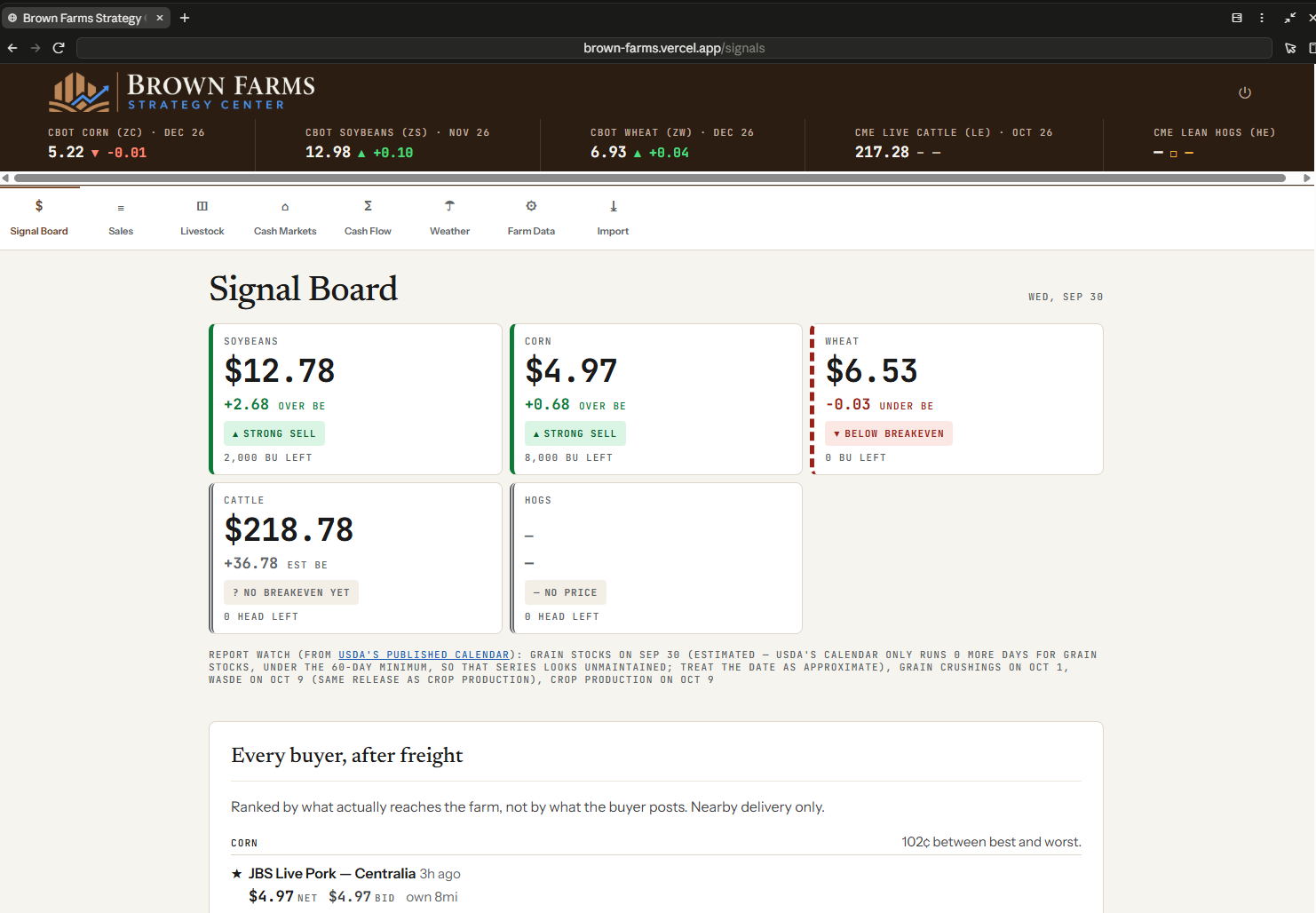
Built for a working family farm, the system combines commodity markets, local cash bids, breakeven economics, livestock, weather-model analysis, cash flow, and operating data to answer practical decisions rather than simply display more information.
Delivered economics
A buyer's posted bid is not the same as the value that reaches the farm. The system ranks buyers on what's left after freight.
Headline bid
− Freight
= Delivered farm value
The decision is based on what reaches the farm, not what appears on the sign.
Operating context
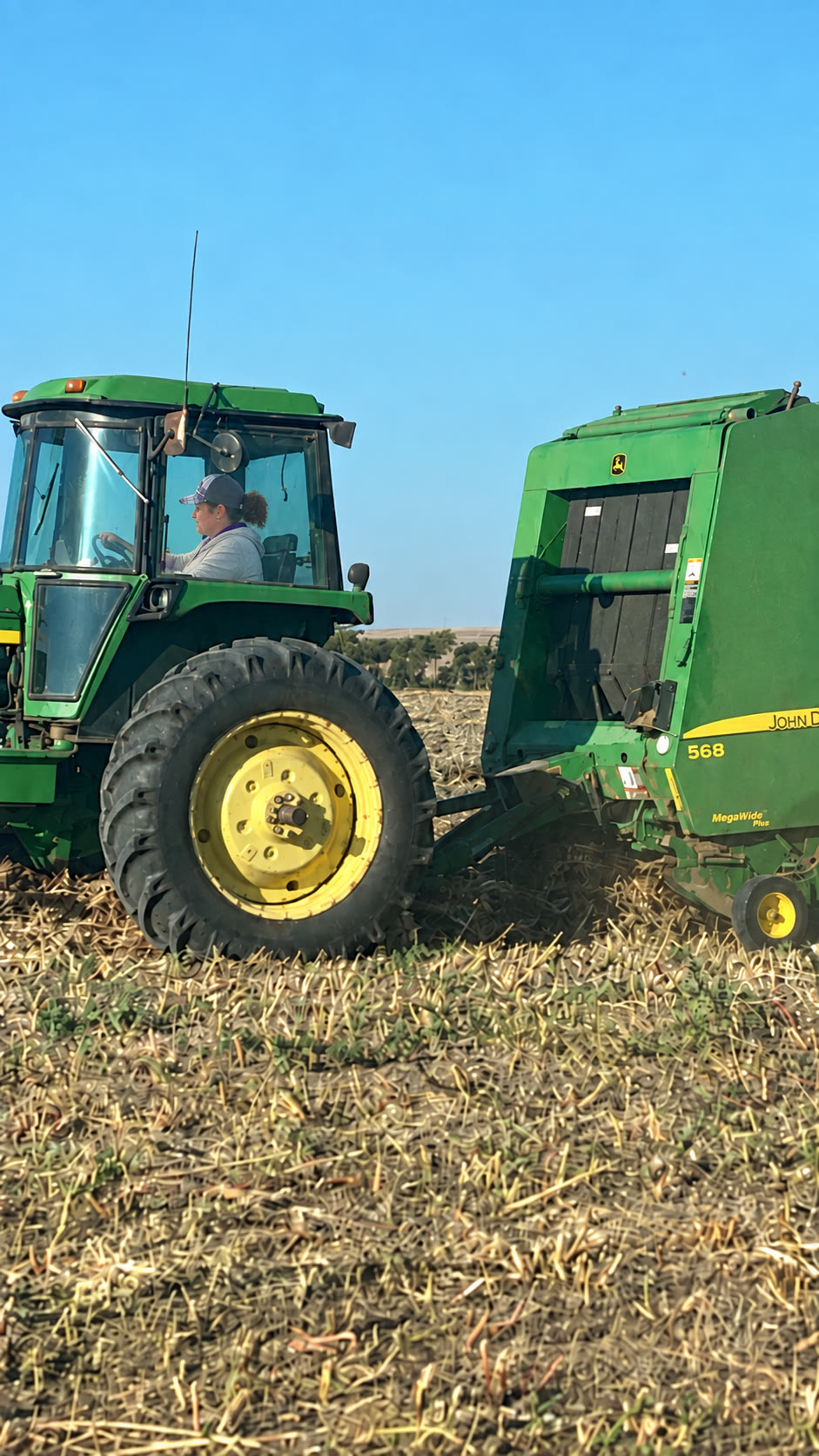
Built by someone who runs the equipment.
Each tool answers a decision the operation actually faces — when to sell, which buyer, what the herd is costing, whether the forecast can be trusted. The requirements come from doing the work, not from interviewing it.
Cattle
Herd records and cost per head
Economics
Breakeven and cash flow
Markets
Futures, basis, local cash bids
Weather
Four models, confidence shown
Agents / AI
Questions answered against farm data
The system does not hide uncertainty.
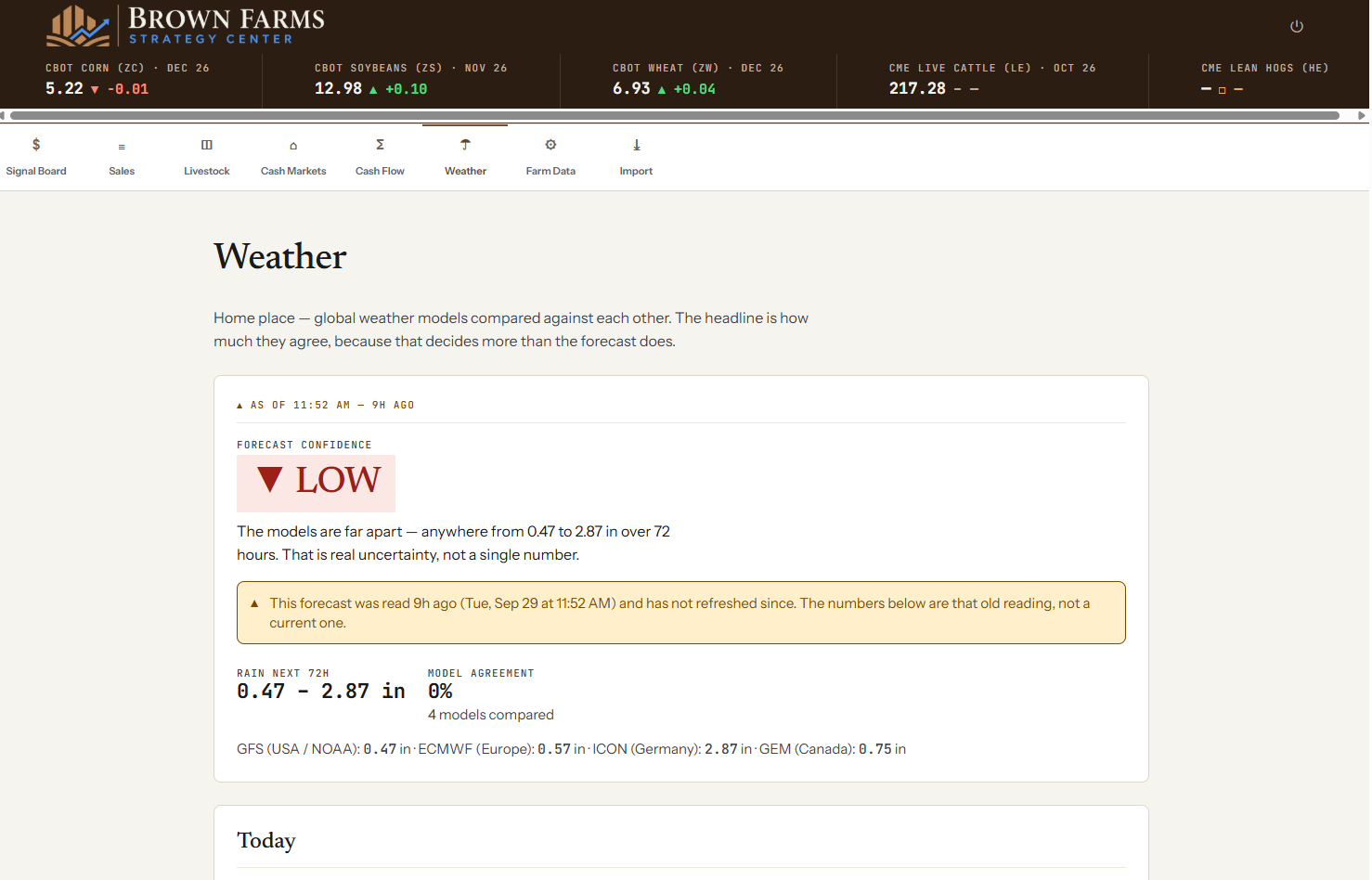
The system compares several global weather models and exposes agreement, disagreement, stale readings, and forecast confidence instead of collapsing them into one falsely precise answer.