
Enterprise operations
Enterprise Fleet Transformation
Turning sustainability goals into enterprise operating controls across ~4,000 vehicles.
The fleet is an operating system, not an electrification program.
- My role
- Business Lead, Senior Leadership Team sponsored fleet transformation, North American field service
- Scale
- ~4,000 vehicles · nine functions: Operations, Procurement, Supply Chain, Safety, HR, Labor, Legal, Finance and field leadership
- Period
- 2025
- Outcome
- ~8% smaller fleet through utilization and operating controls.
- Carbon outcome
- ~10% current-year fleet-carbon reduction trajectory.
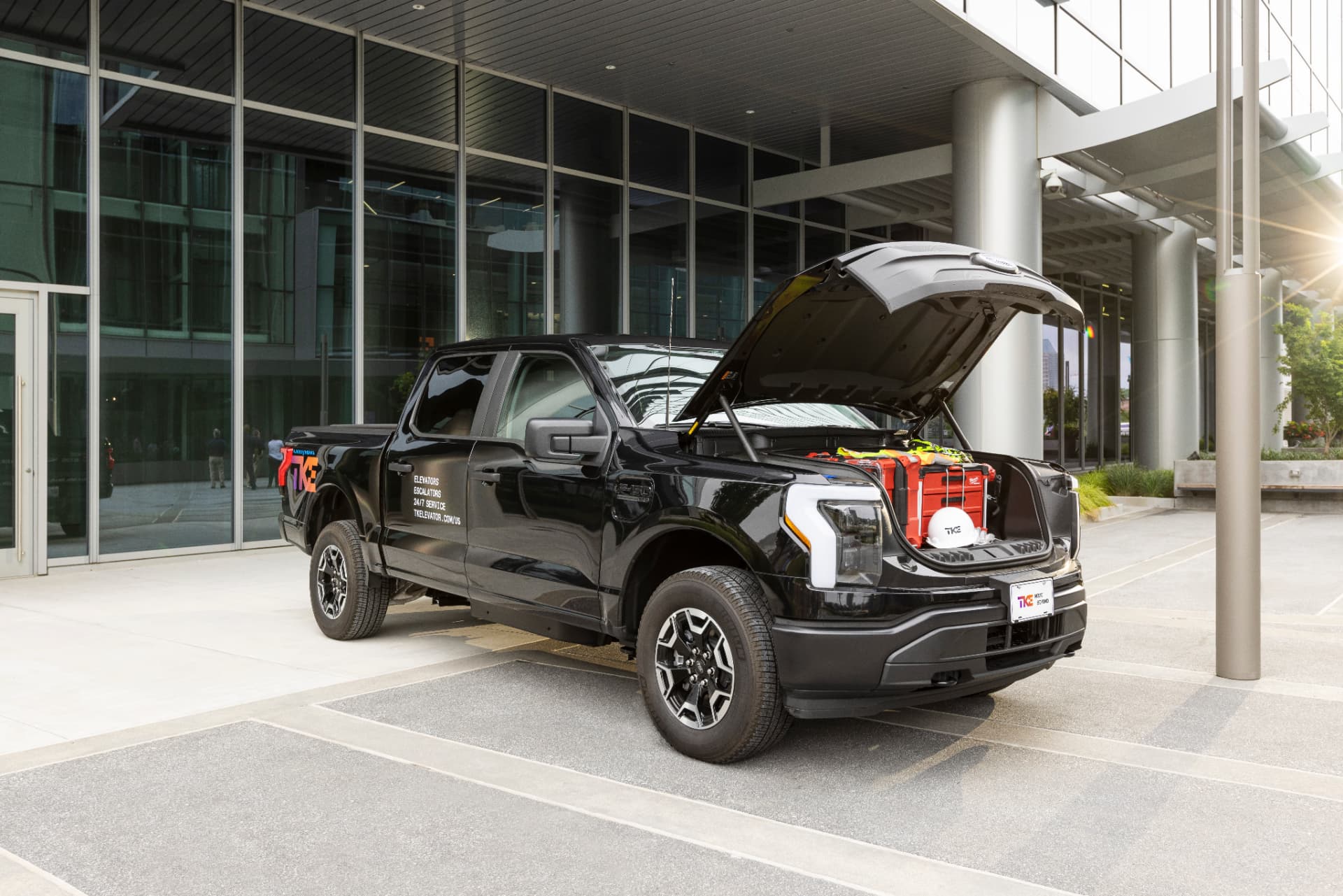
Ford F-150 Lightning fleet electrification pilot — TK Elevator
Early field testing helped connect carbon strategy with real-world vehicle, charging and operational considerations.
© TK Elevator. Used with permission.Senior Leadership Team sponsored · North American field service
From pilot to operating system
- 01
Pilot
Early fleet-electrification work, including Ford F-150 Lightning field testing.
- 02
Learn
Vehicle use, charging, duty cycle and field requirements in real operating conditions.
- 03
Scale
Governance, right-sizing, vehicle strategy, policy, safety and procurement across ~4,000 vehicles.
I led the pilot work; I was Business Lead for the broader enterprise fleet transformation.
The system
Context
Vehicles are specified locally, purchased on different cycles, held for varying lifetimes, and replaced according to habit as often as policy.
Nobody was making bad decisions. The decisions were simply being made in isolation.
- Operations
- Procurement
- Safety
- HR
- Labor
- Legal
- Cost
- Carbon
Enterprise operating controls · ~4,000 vehicles
- Assignment
- Right-sizing
- Spare ratio
- Authorization
- Driver governance
- Procurement
- Lifecycle
- Policy
- Accountability
Why it mattered
Fleet is one of the largest cost, safety, and emissions levers in a field-service business. Governing it well moves all three at once.
Decisions & detail
The tradeoff
Every decision had to balance service reliability, field coverage, driver safety, operating cost, procurement constraints, and carbon. Lower emissions only counted if technicians still reached customers safely and on time.
- Service reliability
- Field coverage
- Driver safety
- Operating cost
- Procurement constraints
- Carbon
Results
- ~4,000
- Vehicles
- ~8%
- Fleet-size reduction through utilization and operating controls
- ~10%
- Current-year fleet-carbon reduction trajectory
Lessons
- A policy they did not help shape will be worked around within a quarter.
- Field credibility is a technical requirement, not a soft skill.